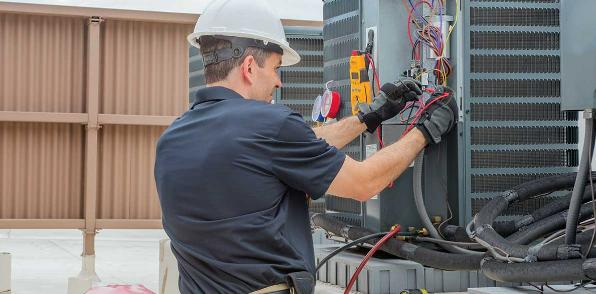
Here’s how to run your AC during a heat wave without breaking it: pick a steady setting (usually 75°F to 78°F), leave it there, block the sun, and make sure air can move freely through the filter and the outdoor unit. Don’t crank the thermostat down to 65°F to “catch up.” Your AC can’t cool faster; it can only run longer, and that’s what wears it out.
This guide explains why air conditioners fail on the hottest days, what to do before and during a heat wave, and which warning signs mean you should turn the system off. It’s written for homeowners around Vancouver, WA, and Portland, where many systems were never sized for 100°F+ weather.
Key takeaways
- Steady beats cold. Set it at 75–78°F and leave it. Big drops and on/off cycling are what stress the system.
- Running all day is normal in a heat wave. Ice, burning smells, loud grinding, or a tripped breaker are not.
- Cut the heat load: close blinds on sunny windows, skip the oven, and use ceiling fans in rooms you’re in.
- Give it air: check the filter, clear and rinse the outdoor unit (power off), and keep vents open.
- After a power flicker, wait. Give the system a few minutes before switching it back on.
| Do this | Avoid this |
| Keep one steady setting, 75–78°F | Dropping to 65°F to cool faster |
| Pre-cool a little in the morning | Turning the AC off while you’re out, then blasting it |
| Close blinds on south- and west-facing windows | Running the oven or dryer mid-afternoon |
| Check the filter and clear the outdoor unit | Closing vents in empty rooms |
| Turn the system off if you see ice or smell burning | Restarting right away after a power blip |

Why ACs Break During a Heat Wave
ACs break in heat waves because they’re pushed past what they were designed for, for days at a time. A home air conditioner is built to handle a certain outdoor temperature and to cool the house a limited number of degrees below it. When it gets hotter than that, the system runs nonstop, and the weakest part gives out.
HVAC technicians interviewed by WLOX in July 2026 said most units are designed and tested to perform best at around 95°F. One technician said that at 99°F outside, setting the thermostat to the mid-60s goes beyond the roughly 20-degree temperature difference a system is built for (reported, Jul 2026).
Capacitors are the number one casualty during a Clark County heat wave,” says Edward, lead HVAC technician at RHCC HVAC. “On a 100°F day last July, we responded to a call in Battle Ground where the AC just stopped blowing cold. The outdoor condenser was completely blanketed in cottonwood fluff and dog hair. Because the system couldn’t breathe, the compressor overheated and blew the dual run capacitor. It’s a $15 to $30 part that will take down your entire system exactly when you need it most.
So on a 104°F afternoon, a house holding 80°F to 84°F may mean your AC is doing its job. Asking it for 68°F doesn’t make it cool faster. It just keeps the compressor running hard with no break, and parts like capacitors and fan motors heat up. If your system already struggles on normal summer days, our guide on why an air conditioner takes too long to cool covers the usual causes.
The Best Thermostat Setting During a Heat Wave
The best setting is a steady, comfortable temperature, usually between 75°F and 78°F, that you leave alone. Steady settings let the system settle into long, even runs instead of fighting a big gap all afternoon.
- Don’t chase a low number. Setting 65°F won’t cool the house faster. The air coming out of the vents is the same temperature either way; the system just runs longer.
- Don’t turn it off when you leave. In a heat wave, the house soaks up heat all day. When you come home and restart, the AC faces a huge gap it may never close before evening.
- Pre-cool in the morning. Lower the setting a degree or two in the cooler morning hours, then let it drift back up through the afternoon. The house starts the hot part of the day with a head start.
- Raise it a little and add a fan. ENERGY STAR says raising your thermostat by just two degrees and using a ceiling fan can cut air conditioning costs by up to 14% (checked Oct 2026).
- Leave the fan on “Auto” unless you have a reason not to. On “Auto,” the blower stops between cycles, which gives moisture on the indoor coil time to drain away. We go into the trade-offs in whether you run your AC fan 24/7.
When to actually turn it off: While conventional advice says never turn your AC off during a heat wave, Edward disagrees in two specific scenarios: “If you see ice on your refrigerant lines, or if you are leaving town for a few days, turn it off or bump it to 85°F. I recently went to a house where the owner left the AC at 70°F while out of town for a weekend. The filter got clogged, the coil froze solid into a block of ice, and the compressor died trying to push through it. If you aren’t home to monitor it, don’t leave it running at peak strain.”
If the house can’t get below a certain temperature, set the thermostat close to what it actually reaches. That lets the system finish a cycle and rest instead of running without end.
How to Cut the Heat Your AC Has to Fight
The easiest way to protect your AC is to give it less heat to remove. Every bit of sun, oven heat, and humid air you keep out is work the system doesn’t have to do.
- Close blinds and curtains on south- and west-facing windows during the day. Sunlight through glass turns into heat inside the house. Blackout or thermal curtains help most.
- Keep windows closed during the day. Open them only when it’s cooler outside than inside, usually late at night or early morning, and only if the AC is off. Close them again before the day heats up.
- Skip heat-making chores in the afternoon. Run the oven, dryer, and dishwasher in the early morning or late evening, or grill outside.
- Use ceiling fans the right way. ENERGY STAR says to run them counterclockwise in summer and to turn them off in empty rooms, because fans cool people, not rooms.
- Control humidity. Run bathroom and kitchen exhaust fans while showering and cooking. Damp air feels warmer and makes your AC work harder. Here are more ways to reduce indoor humidity with your HVAC.
- Mind the attic. A hot attic heats the ceilings and any ducts running through it. Better attic ventilation and insulation are longer-term fixes worth planning before next summer.

Give Your AC Room to Breathe: A 10-Minute Heat Wave Checklist.
Most heat-wave breakdowns start with blocked airflow. An AC moves heat from inside to outside, and anything that slows the air on either end makes it work harder. Do these checks before the heat arrives, or during a cooler morning.
- Check the air filter. ENERGY STAR recommends checking it every month and says a dirty filter makes the system work harder. If you can’t see light through it, replace it.
- Clear the outdoor unit. Pull weeds, grass clippings, and leaves away, and trim plants back so air can flow freely on every side.
- Rinse the outdoor coil. Turn the power off first at the thermostat and the outdoor shut-off. Then rinse the fins gently from the outside with a garden hose to wash off dust and cottonwood fluff. No pressure washer: it bends the thin fins.
- Open every vent and return. Closing vents in unused rooms doesn’t save energy and can restrict airflow through the whole system. Move furniture and rugs off vents. More tips are in our guide to improving HVAC airflow.
- Look at the condensate drain. Water around the indoor unit or a full drain pan usually means the drain line is clogged. A clogged drain can also lead to mold, as we explain in how to prevent mold growth in your HVAC system.
Coil cleaning inside the unit and refrigerant checks are jobs for a technician. ENERGY STAR recommends a professional check-up of the cooling system every spring, before the heat starts. Here’s what’s included in an HVAC tune-up and how often to service your air conditioner.
Warning Signs: When to Turn Your AC Off
Turn the AC off when you see signs of damage, not just long run times. Running for hours in a heat wave is normal. These are not:
| What you notice | What it often means | What to do |
| Ice or frost on the copper lines or indoor coil | Airflow problem or low refrigerant | Turn cooling off, run the fan only to thaw, check the filter |
| Grinding, screeching or loud buzzing | Failing motor, fan or electrical part | Turn it off and call for service |
| Burning or electrical smell | Overheating wiring or motor | Turn it off at the thermostat and breaker |
| Breaker trips again after a reset | Electrical fault or a struggling compressor | Don’t keep resetting it; call for service |
| Weak or warm air from the vents | Clogged filter, frozen coil or outdoor unit not running | Check the filter and outdoor unit, then call |
| Water pooling near the indoor unit | Clogged condensate drain | Turn it off and clear or check the drain |
| Outdoor fan spins but the unit isn’t cooling | Compressor or capacitor problem | Turn it off and call for service |
Running a frozen system or one with a failing part can turn a small repair into a big one. If your AC has frozen up, follow our steps for what to do if your AC freezes. If the outdoor fan runs but the compressor doesn’t, see AC condenser not running but fan is. If the system turns on and off every few minutes, read why your HVAC system is short cycling.
What to Do After a Power Outage or Flicker
After a power outage or flicker, wait a few minutes before turning the AC back on. Restarting a compressor right after it stops makes it start under strain.
This is the “3-minute rule” people ask about. Many systems handle it for you: LG, for example, says its air conditioners delay restarting for 3 minutes after the unit has stopped, to protect the compressor (checked Oct 2026). Many thermostats have a similar built-in delay, so a short wait before the system comes back is normal, not a fault.
If the power goes out completely, set the thermostat to off. When power returns, wait a few minutes, then switch it back to cool at your normal setting. If the system won’t restart, check the breaker once. If it trips again, leave it off and call a technician.
What Pacific Northwest Homeowners Should Expect
In Vancouver and Portland, many air conditioners and heat pumps were sized for a mild summer, so expect them to struggle a bit when temperatures pass 100°F. That’s not always a sign something is broken.
GreenSavers, an HVAC company serving Portland and Southwest Washington, reports Portland’s outdoor design temperature in the mid-80s to mid-90s (reported, Aug 2025). The June 2021 heat dome blew past that: the National Weather Service recorded 116°F at Portland International Airport on June 28, 2021, a record for the city, per East Portland News (reported).
During the June 2021 heat dome, it was absolute chaos for PNW air conditioners,” recalls Edward. “We were fielding over 50 calls a day—triple our normal volume. Systems that ran perfectly fine at 95°F simply couldn’t keep up, and older compressors were failing left and right. Homeowners were panicking, but the reality was their systems were just never engineered to handle Death Valley temperatures.
What this means for you:
- A heat pump cooling your home follows the same rules. Steady setting, clean filter, clear outdoor unit. If yours isn’t keeping up, see our heat pump repair page.
- Plan. The best time to fix a weak system is spring, before the first 90°F week. Our guide to preparing your AC for summer covers what to do.
- Look after people too. If the house gets dangerously hot, spend the hottest hours somewhere cooled, drink water, and check on older neighbors.

FAQ
What is the 3-minute rule for air conditioners?
It means waiting about 3 minutes after an AC shuts off before turning it back on. The pause protects the compressor from restarting under strain. Many units and thermostats build in this delay automatically.
Should I open or close my windows during a heat wave?
Keep them closed during the day while the AC runs, with blinds drawn on sunny sides. Open them only at night or early morning when it’s cooler outside than inside, with the AC off, and close them before it warms up.
What is the best way to run your AC in the summer?
Set one comfortable temperature, usually 75°F to 78°F, and leave it. Keep the filter clean, the outdoor unit clear, the blinds closed on sunny windows, and use ceiling fans in rooms you’re using.
Why can’t my AC keep up with the heat wave?
Most systems are designed to cool about 20 degrees below a design temperature around 95°F (reported by technicians). Past that, holding 72°F may be impossible. A dirty filter, blocked outdoor unit, low refrigerant, or a failing part makes it worse.
What temperature should I set my AC to during a heat wave?
A steady 75°F to 78°F works for most homes. If the house can’t get that low, set it close to what it actually reaches so the system can finish its cycles.
Is it bad for my AC to run all day in a heat wave?
No. Long run times are normal in extreme heat, and a steady run is easier on the system than turning it off and on. Turn it off only if you see warning signs such as ice, burning smells, or a tripping breaker.
Should I turn my AC off when I leave the house during a heat wave?
No. Raise it a few degrees instead. Turning it off lets heat build up all day, and the system may not catch up before night.
How to Run Your AC During a Heat Wave Without Breaking It: The Short Version
Running your AC through a heat wave comes down to a few habits: a steady setting, less heat coming in, clean airflow, and knowing when to turn it off. If your system is iced up, making strange noises, or blowing warm air, it’s time for a technician. RHCC offers AC repair in Vancouver, WA, and HVAC service. Contact RHCC or call 360-984-1853.